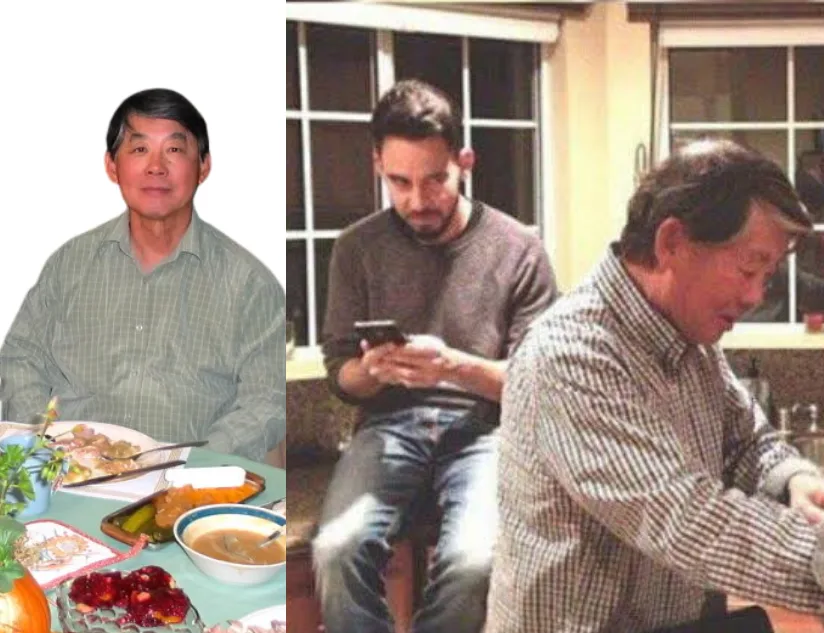
Muto Shinoda is best known as the father of musician and Linkin Park co-founder Mike Shinoda. Although Muto has largely lived outside the public spotlight, his family history has become part of Mike's understanding of Japanese American identity and his creative work.
Mike Shinoda has spoken publicly about his father's childhood during World War II, when Japanese Americans were forcibly removed from their homes and incarcerated by the U.S. government. Muto was only three years old when his family was sent to the Santa Anita Assembly Center in California. His family's experience later became an important part of the story behind Mike's song "Kenji."
Unlike his son, Muto Shinoda does not have a well-documented public career. Available reliable sources focus mainly on his family background and the experiences that Mike learned from him.
| Biography Detail | Information |
| Full Name | Muto Shinoda |
| Known For | Being the father of musician Mike Shinoda |
| Nationality | American |
| Ethnic Background | Japanese American |
| Birth Year | Not reliably documented |
| Age | Not publicly verified |
| Spouse | Donna Shinoda |
| Children | Mike Shinoda and Jason Shinoda |
| Son | Mike Shinoda, co-founder of Linkin Park |
| Family History | His family experienced Japanese American incarceration during World War II |
| Age During WWII Incarceration | 3 years old |
| Santa Anita Assembly Center | His family was held there before being transferred to Poston, Arizona |
| Profession | Not reliably documented |
| Education | Not publicly documented |
| Known Cultural Influence | His wartime experiences helped inspire Mike Shinoda’s “Kenji” |
| Public Profile | Private / limited public information |
Early Life & Background
Muto Shinoda was born into a Japanese American family in California. His father, Mike's grandfather, was an immigrant from Japan and part of the Issei generation. He eventually established businesses in Orosi, California, where the Shinoda family operated a grocery store and later added other local businesses.
Muto belonged to the Nisei generation, meaning he was a second-generation Japanese American. According to accounts based on Mike Shinoda's interviews, Muto was only three years old when his family was forced to leave their home during World War II.
The experience became a significant part of the family's history. Mike has explained that his father's family was among the Japanese American families incarcerated during the war and that hearing those stories influenced his understanding of racism, identity and his Japanese American heritage.
Muto Shinoda and World War II Incarceration
One of the best-documented aspects of Muto Shinoda's life is his childhood experience during the U.S. government's wartime incarceration of Japanese Americans.
When Muto was three, his family was given only a short period to leave their home. The family was eventually taken to the Santa Anita race track, which was used as an assembly center before Japanese American families were transferred to more permanent incarceration camps. Mike later described learning that his father and relatives had been housed in horse stalls at Santa Anita.
The Shinoda family's story was not simply one of displacement. Before the war, the family had established businesses in Orosi, California. Their grocery store became part of the family's livelihood, while other businesses were added over time. The family's property and business life were disrupted when Japanese Americans were ordered to leave their homes.
Mike has said that these family experiences shaped the way he approached questions of race and cultural identity.
Family
Muto Shinoda and Donna Shinoda are identified as the parents of Mike Shinoda. Mike was born in California in 1977 and was raised in Agoura Hills. He also has a younger brother, Jason Shinoda.
Mike has frequently discussed his father's Japanese American heritage. In interviews, he has described how his father's family was affected by wartime incarceration and how those experiences remained part of the family's history even decades later.
Muto is therefore an important figure in understanding the cultural background that influenced his son's work, even though Muto himself has remained largely private.
Connection to Mike Shinoda's "Kenji"
Muto Shinoda's wartime experience became particularly relevant to Mike's 2005 Fort Minor song "Kenji."
Mike created "Kenji" after researching Japanese American incarceration and speaking with members of his own family. The Japanese American National Museum's profile of Mike explains that interviews with his father and aunt were incorporated into the song.
The song tells a fictionalized story while drawing on real historical experiences and family memories. Through the project, Mike connected his family's past with a wider history of Japanese American incarceration during World War II.
Muto Shinoda's Influence on His Son
Muto's influence on Mike Shinoda is most visible through the musician's interest in Japanese American history and identity.
Mike has discussed how his father's experiences helped him understand what it meant to grow up Japanese American in Southern California. He has also described the difficulty of preserving memories of wartime incarceration as the generation that experienced it directly becomes smaller.
The subject has remained relevant to Mike's creative work beyond "Kenji." His music, visual art and public discussions have repeatedly touched on identity, discrimination and cultural heritage.
Career and Profession
There is limited reliable public information about Muto Shinoda's own profession.
Sources discussing the Shinoda family history establish that his family operated businesses in Orosi, including a grocery store, and later a barbershop, pool hall and gas station. However, the available sources do not provide enough evidence to assign Muto a specific long-term occupation or business title of his own.
For that reason, detailed claims about his career, employment history or personal finances are best left out.
Personal Life
Muto Shinoda has maintained a private life and has not been a public entertainment figure. Most information about him comes from interviews given by his son rather than from interviews or public appearances by Muto himself.
Reliable sources identify Donna Shinoda as Mike's mother and Muto as his father. Beyond those established family connections, detailed information about Muto's personal life is limited.
There is also no reliable public information supporting a current net-worth estimate for Muto Shinoda, so no figure is included.
Interesting Facts About Muto Shinoda
- Muto Shinoda is the father of Linkin Park co-founder and musician Mike Shinoda.
- Muto was only three years old when his family was incarcerated during World War II.
- His family was held at the Santa Anita Assembly Center before being moved elsewhere.
- Muto's father was an immigrant from Japan and part of the Issei generation.
- The Shinoda family operated a grocery store in Orosi, California, and later expanded into other local businesses.
- Mike Shinoda incorporated interviews with his father and aunt into the creation of Fort Minor's song "Kenji."
FAQs
Who is Muto Shinoda?
Muto Shinoda is the father of musician Mike Shinoda, best known as a co-founder, vocalist and multi-instrumentalist of Linkin Park.
What is Muto Shinoda known for?
Muto is primarily known publicly because of his connection to Mike Shinoda and his family's experience of Japanese American incarceration during World War II.
Was Muto Shinoda incarcerated during World War II?
Yes. Mike Shinoda has described how Muto, who was three years old at the time, was taken with his family to the Santa Anita Assembly Center during the wartime incarceration of Japanese Americans.
Who are Muto Shinoda's children?
Muto and Donna Shinoda are the parents of Mike Shinoda. Mike also has a younger brother named Jason.
Did Muto Shinoda influence Mike Shinoda's music?
His family history had a documented influence on Mike's work. Mike's Fort Minor song "Kenji" drew on Japanese American incarceration history and incorporated interviews with his father and aunt.
What was Muto Shinoda's family business?
The Shinoda family operated a grocery store in Orosi, California, and later had other businesses, including a barbershop, pool hall and gas station.
How old is Muto Shinoda?
Muto Shinoda's exact date of birth has not been reliably established in authoritative public sources. Available reporting confirms that he was three years old during the World War II incarceration of his family, but it does not provide enough evidence to calculate his current age accurately.
Conclusion
Muto Shinoda has remained largely out of the public eye, but his family history has had a lasting impact on his son Mike Shinoda. His childhood experience of Japanese American incarceration, together with the family's earlier life and businesses in California, became an important part of Mike's understanding of heritage and identity.
The clearest public record of Muto comes through his son's interviews and the historical material surrounding the Shinoda family's wartime experience. Beyond those documented details, relatively little about Muto's private life or career has been publicly established, making a cautious, fact-based account more appropriate than the unsupported biographies found elsewhere online.